Understanding Brain Stroke: Recognition, Prevention, Recovery and Family Support
Sample:
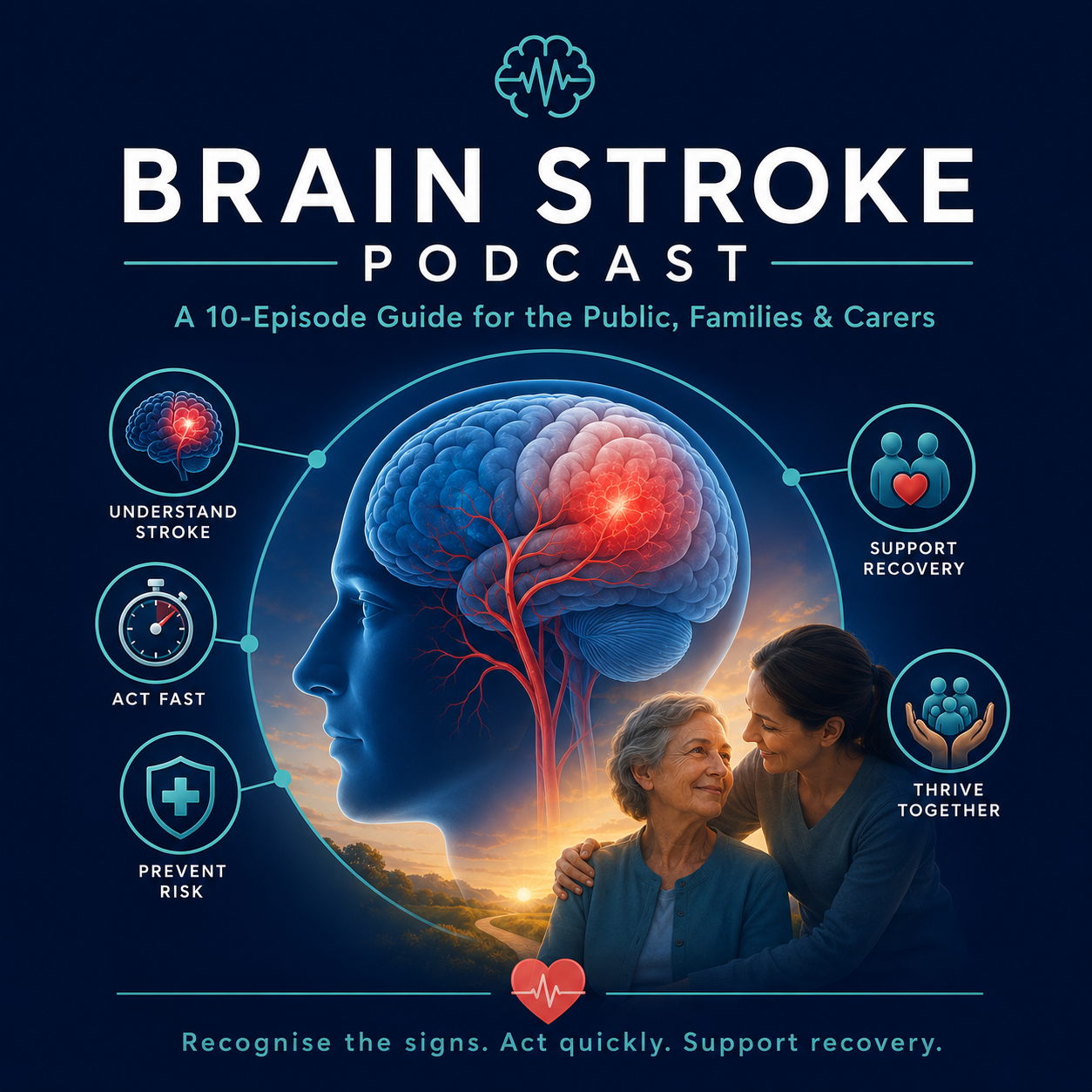
Brain stroke can happen suddenly, but knowing what to look for and how to respond can make a life-changing difference. This practical course is designed for the general public, family members, carers, and anyone who wants to understand stroke in clear, everyday language.
Through ten easy-to-follow lessons, learners will discover what a stroke is, how to recognise common and less obvious warning signs, and what to do during the first critical minutes. The course also explains transient ischaemic attacks, often called mini-strokes, and why temporary symptoms must never be ignored.
Learners will explore the main factors that increase stroke risk, including high blood pressure, diabetes, high cholesterol, irregular heartbeat, smoking, alcohol, unhealthy food habits, and physical inactivity. Practical guidance is provided on reducing these risks and helping to prevent a first or subsequent stroke.
The course also follows the patient’s journey through hospital assessment, brain scans, treatment, swallowing checks, rehabilitation, and discharge home. It explains common physical and emotional changes after stroke, including weakness, walking difficulties, arm problems, speech changes, memory difficulties, fatigue, low mood, and changes in behaviour.
Families and carers will learn how to support recovery without taking away independence, communicate respectfully, prepare the home for safer daily living, manage medicines, recognise urgent warning signs, and look after their own wellbeing.
By the end of the course, learners will be better able to:
- Recognise possible stroke symptoms and respond quickly.
- Use the FAST method confidently.
- Understand why temporary stroke symptoms need urgent assessment.
- Identify common stroke risk factors.
- Support healthier daily habits and stroke prevention.
- Understand what happens during hospital assessment and treatment.
- Support safe rehabilitation and gradual independence.
- Recognise swallowing, mobility, communication, and emotional difficulties.
- Prepare for a safer return home after hospital discharge.
- Support a stroke survivor with confidence, patience, dignity, and hope.
This course is educational and does not replace personalised medical assessment or advice. If stroke symptoms appear suddenly, contact emergency services immediately.
