
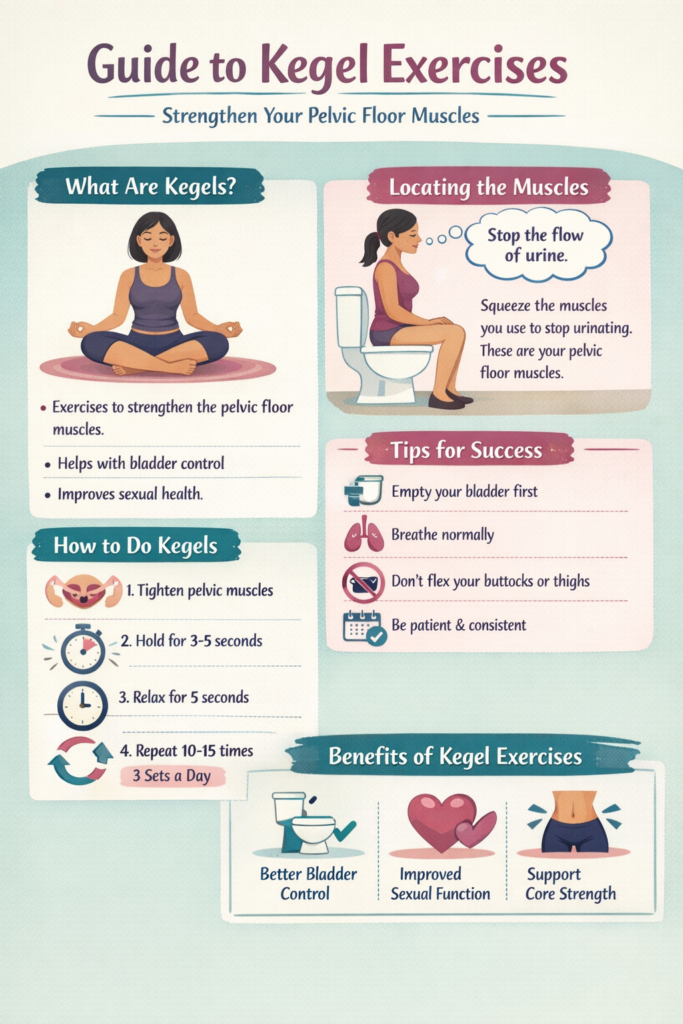
Kegel exercises (often called “pelvic floor exercises”) are simple squeezes and relaxations of the muscles that support your bladder, bowel, and (for many people) the uterus or prostate. When done correctly and consistently, they can help improve bladder control, support recovery after childbirth or certain surgeries, and improve pelvic stability.
This guide explains what Kegels are, who they can help, how to do them correctly, and common mistakes to avoid.
What is the pelvic floor?
Your pelvic floor is a group of muscles and connective tissues that form a supportive “hammock” at the bottom of your pelvis. These muscles help:
- Support pelvic organs (bladder, bowel, uterus/prostate)
- Control urine and bowel movements
- Contribute to sexual function
- Support your core and posture
When pelvic floor muscles are weak—or sometimes too tense—they may not work as smoothly as they should.
What are Kegel exercises?
Kegel exercises strengthen the pelvic floor by practicing:
- Tightening (contracting) the pelvic floor muscles
- Holding the contraction briefly
- Relaxing completely afterward
Like any muscle training, results depend on doing the right movement and practicing regularly.
Who can benefit from Kegels?
Kegels are commonly recommended for people who have:
- Urine leakage when coughing, laughing, sneezing, or exercising (stress incontinence)
- A strong urge to urinate and trouble holding it (urgency)
- Leakage after pregnancy or childbirth
- Pelvic organ prolapse symptoms (a feeling of heaviness or “bulging”)—sometimes as part of a bigger plan
- Recovery after pelvic surgery (your clinician will guide the right timing)
- Post-prostate treatment leakage (many people benefit with guidance)
Important note
Not everyone should “just do Kegels.” If your pelvic floor muscles are overly tight, Kegels done without guidance can sometimes worsen symptoms like pelvic pain, painful sex, constipation, or difficulty starting urination. If any of these apply to you, consider asking about a pelvic health physiotherapist.
How to find the correct muscles
The pelvic floor muscles are the ones you use to:
- Stop gas from passing
- Hold in urine
A quick way to identify them is to imagine you’re trying to stop yourself from passing gas. You should feel a gentle lift and squeeze inside the pelvis.
Avoid making a habit of stopping your urine midstream to “practice.” Doing it occasionally to identify the muscles can be okay, but repeatedly stopping the flow may irritate the bladder or lead to incomplete emptying.
How to do Kegels correctly (step-by-step)
1) Get into a comfortable position
Start lying down or sitting. As you get better, you can do them standing too.
2) Relax first
Take a breath and let your belly, buttocks, and thighs soften.
3) Gently squeeze and lift
Tighten the pelvic floor muscles (as if holding in gas and urine) and feel a small lift upward.
4) Hold, then fully relax
- Hold for 3–5 seconds
- Relax for 5 seconds
- Focus on letting the muscles fully release between contractions
5) Repeat
Try 10–15 repetitions, up to 3 times a day, if recommended by your clinician.
As you build strength, you may work toward holding 8–10 seconds, but only if you can still relax completely afterward.
Breathing tips (very important)
A common mistake is holding your breath while you squeeze. Instead:
- Breathe normally
- If it helps: inhale to prepare, then gently squeeze as you exhale
Good breathing helps the pelvic floor work with your core instead of against it.
Common mistakes to avoid
To get the best results, try not to:
- Squeeze your buttocks or thighs (you may feel these a little, but they shouldn’t be doing the main work)
- Pull in your stomach hard like a crunch
- Bear down (pushing out instead of lifting in)
- Hold your breath
- Overdo it (more isn’t always better—fatigue can worsen control)
If you’re unsure you’re doing it correctly, it’s worth asking a clinician to check your technique.
When will I notice results?
Many people notice improvement in 4–12 weeks with consistent practice. Progress may be gradual.
You might notice:
- Fewer leaks
- Better control when you feel urgency
- More confidence during exercise and daily activities
If you’ve been practicing consistently for a couple months and notice no change, you may need technique adjustments or a different plan.
Helpful ways to remember to practice
Try linking Kegels to something you already do:
- After brushing teeth
- While waiting for the kettle/microwave
- During a commute (if you’re not driving)
- During a TV ad break
Some people like a reminder on their phone. The key is consistency, not doing them perfectly every day.
When to talk to a healthcare professional
Ask for help if you have:
- Pelvic pain or pressure
- Pain with sex
- Trouble emptying your bladder
- Ongoing constipation
- Worsening symptoms after starting Kegels
- No improvement after 8–12 weeks
A pelvic health clinician can check whether you need strengthening, relaxation work, or a combination.
Quick recap
- Kegels strengthen the pelvic floor muscles
- They can help with bladder control and pelvic support
- The key is correct muscle + full relaxation
- Aim for 10–15 reps, hold 3–5 seconds, relax 5 seconds, up to 3 sets/day (if advised)
- If you have pelvic pain or trouble relaxing, get guidance before doing lots of Kegels